
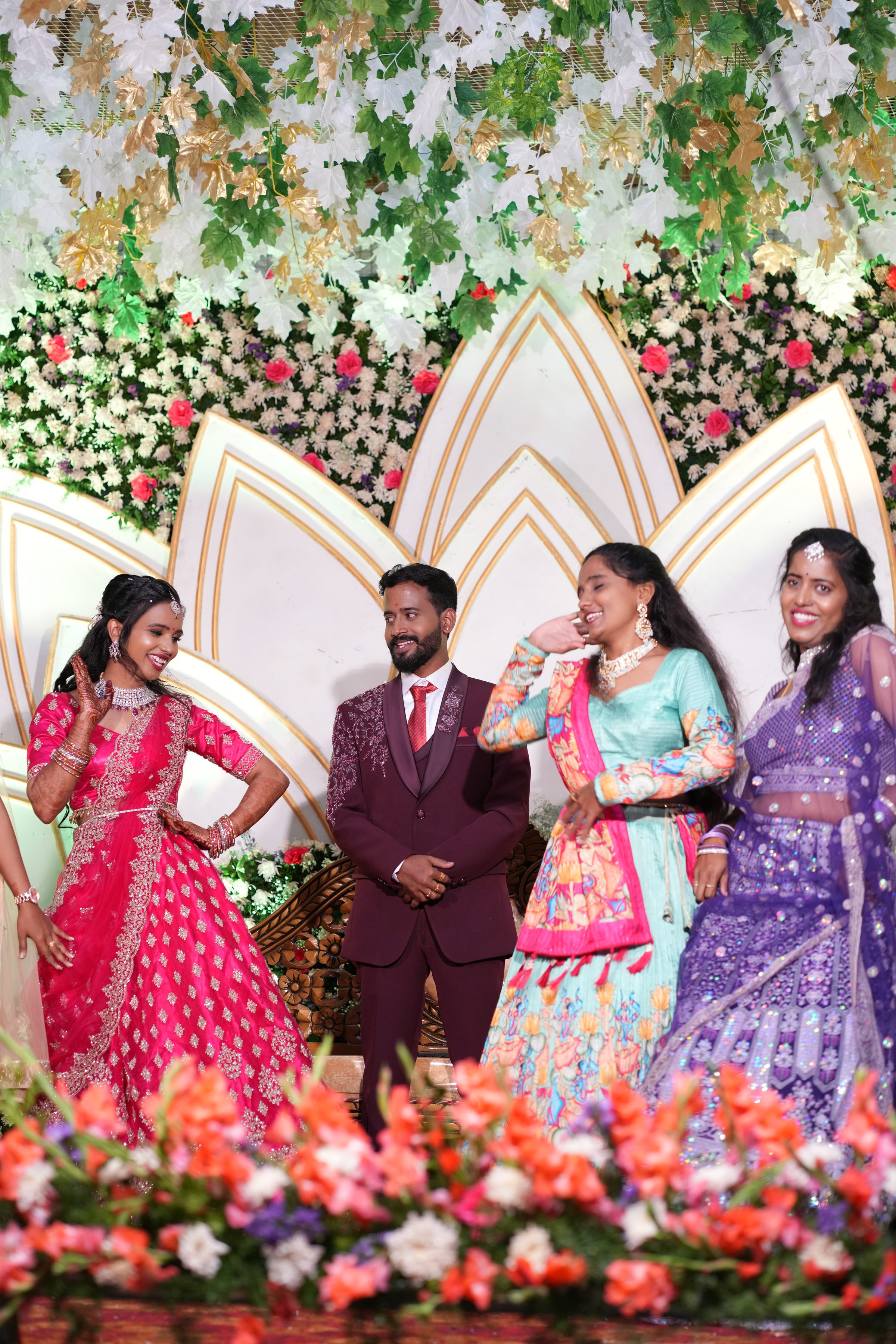
Choosing a wedding photographer is one of the few wedding decisions you can’t redo. The flowers wilt, the food is eaten, the guests go home — the photographs and films are what stay. In a city like Bangalore, where you might be comparing dozens of studios across very different styles and price points, it helps to have a clear way to narrow the field. This guide walks through what actually matters, in the order it matters.
Start with style, not price
Before you look at a single package, look at complete galleries and full wedding films — not just the highlight reels on Instagram. A studio’s showreel is its best ten seconds; a full gallery tells you how they handle an ordinary moment, a harsh mid-day mandap, a crowded reception.
As you look, notice which of these feels like you:
- Candid / documentary — real, unposed moments, minimal direction. Emotion over perfection.
- Traditional — posed portraits, family groupings, every ritual covered head-on.
- Editorial / cinematic — styled, magazine-like frames with considered light and composition.
Most good studios blend these, but each leans a certain way. If you love relaxed, storytelling images, a heavily posed portfolio will disappoint you no matter how polished it is. We break these down in detail in our guide to candid vs traditional wedding photography and the different wedding photography styles.
Check consistency across a full wedding
Anyone can get five great frames. What you’re paying for is consistency — a whole day photographed to the same standard, from the 6 a.m. preparation to the late-night reception.
Ask to see one or two complete weddings, ideally shot at the kind of venue and in the kind of light you’ll have. A studio that mainly shoots bright outdoor weddings may be less sure-footed inside a dim kalyana mantapa, and vice versa.
Understand who actually shows up
The person whose work you fell in love with is not always the person who photographs your wedding. This is the single most common surprise for couples in Bangalore, where larger studios run multiple teams on the same date.
Ask directly:
- Who is the lead photographer on my date?
- Can I see their individual work, not just the studio’s best-of?
- How many photographers and cinematographers will be present?
- Is a second shooter included, and what do they cover?
There’s nothing wrong with a studio model — it’s how most large weddings are covered — but you deserve to know the team before you sign.
Match coverage to your actual events
South Indian, North Indian and inter-community weddings in Bangalore can run across several days and events — engagement, haldi, mehndi, the wedding itself, and a reception. Map your events first, then ask each studio to quote coverage against that map. A quote for “one day” means very little if your celebration is really three.
If you’re planning rituals a photographer should understand in advance, our Indian wedding photography timeline and shot list and Kannada wedding rituals guide show what thorough coverage looks like.
Get deliverables in writing
“Photos and video” is not a deliverable. Before you compare prices, get each studio to specify, in writing:
- Number of edited, delivered images (not raw files shot)
- Albums — size, number of spreads, print quality
- Films — highlight film length, full film, teaser, same-day edit if any
- Delivery timeline for previews, full gallery and films
- Backup and archival — how long they keep your files
Two quotes that look identical can hide very different value once you see the deliverables side by side. Our guides on how many photos to expect and delivery timelines give realistic benchmarks.
Read the contract like it matters — because it does
A clear contract protects both sides. Look for coverage hours and dates, team size, payment schedule, travel and stay for outstation weddings, a rescheduling clause (weddings move), cancellation terms, and image usage rights. A studio that puts all of this in writing without being chased is telling you something good about how they’ll behave on the day.
Plan for Bangalore’s real conditions
The best local photographers plan around the things Bangalore actually throws at a wedding:
- Monsoon — a June–September wedding needs a backup plan. See our monsoon wedding photography guide.
- Venue light — palace lawns, hotel ballrooms and traditional mantapas each need different lighting approaches.
- Traffic and logistics — a team that knows the city arrives early and doesn’t lose your golden-hour portraits to a jam.
Ask how they’d handle your specific date, season and venue. A confident, specific answer is a very good sign.
Trust the shortlist meeting
Once you’ve narrowed to two or three studios, meet or video-call them. You’ll be spending your most emotional day beside these people; comfort matters. Do they listen more than they pitch? Do they ask about your families and traditions? Do they feel calm? The right team makes you feel looked-after before they’ve taken a single frame.
A simple final checklist
- Their full-gallery style genuinely matches yours
- You’ve seen a complete wedding at a similar venue
- You know the exact lead photographer and team for your date
- Coverage is quoted against all your events
- Deliverables, timelines and backups are in writing
- The contract covers rescheduling, cancellation and usage rights
- They have a clear plan for your season and venue
- You felt comfortable with them in person
When those boxes are ticked, price becomes a fair comparison rather than a gamble.
If you’d like, tell us about your wedding — dates, venue and events — and we’ll walk you through exactly what coverage would look like with Lumeora Studios, with no pressure to book.