
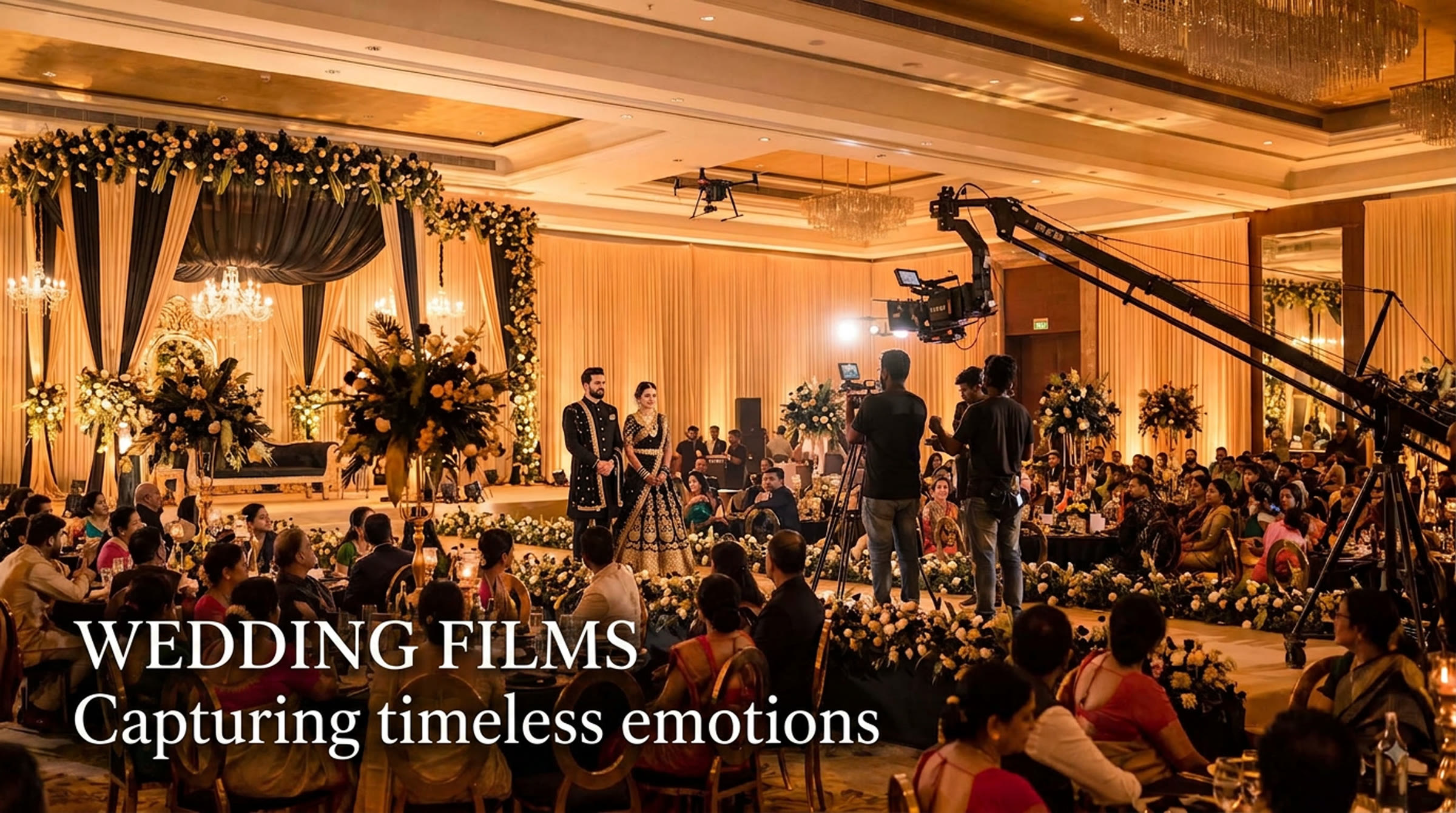
Few things make a wedding film feel as grand as a sweeping aerial shot — the venue from above, the baraat winding in, the whole celebration in one cinematic frame. Drones make it possible, but in India they come with real rules that couples and photographers must respect. This guide explains, in plain terms, how drone wedding coverage works and how to plan it safely and legally. (Rules evolve, so always confirm the current position for your date and venue.)
Important: This is general guidance, not legal advice. Drone regulations in India change over time. Always verify current rules and confirm your venue’s airspace before flying.
Why aerial coverage is worth it
- Scale and grandeur — the venue, décor and gathering seen from above.
- Cinematic movement — sweeping reveals that ground cameras can’t achieve.
- Unique frames — processions, fireworks and large functions from a fresh perspective.
The rules, in plain terms
Drone use in India is regulated (currently under the Drone Rules framework, with registration and operations handled via the Digital Sky platform). What applies to your wedding generally depends on three things:
1. The drone’s weight category
Rules differ by category — from nano and micro drones up to larger ones. Heavier drones carry more requirements. Most wedding drones fall into the smaller categories, but the exact obligations depend on the specific equipment.
2. The airspace zone
India’s airspace is mapped into zones on Digital Sky:
- Green zones — generally the least restrictive; lighter drones can often operate with minimal requirements.
- Yellow zones — controlled airspace (often near airports) needing permission.
- Red zones — no-fly areas where drones are prohibited.
Because Bangalore has significant controlled airspace, your venue’s location relative to these zones is the single biggest factor in whether a drone can legally fly.
3. Operator requirements
Registration of the drone and appropriate operator credentials/permissions may be required. A professional team flying legally will handle this rather than winging it.
Where drones typically can’t fly
- Near airports and within controlled approach zones
- Over or near military and government installations
- In designated restricted or red zones
- Sometimes over dense crowds without appropriate clearance
This is why a venue check matters: a beautiful farmhouse in a green zone may be fine, while a hotel near the airport may not.
How to plan legal aerial coverage
- Share your venue early so the airspace zone can be checked well ahead of the day.
- Work with a responsible team that flies legally, holds the right requirements, and arranges permissions where needed.
- Have a backup. If your venue is in a restricted zone, plan for ground-based cinematic coverage instead — a skilled team creates dramatic frames without a drone too.
- Prioritise safety. Flying over crowds requires care; a good operator manages risk responsibly.
The bottom line
Aerial wedding shots are spectacular and, at the right venue, entirely achievable — the key is a team that treats the rules and safety seriously and checks your specific location in advance. For venues, our Bangalore wedding venues guide notes which settings suit aerial coverage.
Lumeora Studios plans aerial and cinematic wedding coverage responsibly, checking each venue’s airspace before the day. Tell us your venue and we’ll confirm what’s possible.